
How to Choose Paint Sheen: A Room-by-Room Guide for Humid Homes
Flat, matte, eggshell, satin, semi-gloss, or gloss? Here's what each sheen does and where it works best in a humid Florida home, inside and out.
By CityPaintPros Editorial Team · Updated September 30, 2026
Picking a color gets most of the attention, but sheen, how shiny the paint is once it dries, matters almost as much. It changes how a color looks, how well the wall hides flaws, how easy it is to clean, and how it stands up to moisture. In a humid, sunny place like Florida, it's worth thinking through room by room.
This guide explains each sheen in plain terms, then walks through where each one tends to work best.
What sheen actually does
Sheen describes how much light a dried paint surface reflects. Lower sheens scatter light, so they look softer and hide bumps and patches. Higher sheens reflect more light, so they look shinier and show every flaw, but they're usually tougher and easier to wipe clean.
Two practical rules follow from that:
- The more imperfections a surface has, the lower the sheen you'll want.
- The more a surface gets touched, splashed, or steamed, the higher the sheen you'll want.
Most choices come down to balancing those two.
The sheen scale, explained
Sheen names aren't standardized between manufacturers, so one brand's eggshell may look a lot like another's satin. Still, the general order is consistent.
Flat
The least reflective. Flat paint hides wall imperfections better than anything else and reduces glare in bright rooms. It's the usual choice for ceilings. It's harder to clean, so it's less suited to busy walls.
Matte
Slightly more durable than flat in many product lines, with a similar soft, low-glare look. A popular choice for living rooms and bedrooms.
Eggshell
A low, soft glow, a bit like the surface of an egg. More washable than matte while still being fairly forgiving. A common middle-ground choice for many rooms.
Satin
A smooth, soft sheen that's noticeably more reflective than eggshell. Durable and easy to wipe. Often used in hallways, kids' rooms, kitchens, and bathrooms, and sometimes on trim.
Semi-gloss
Clearly shiny and very durable. It stands up to moisture and frequent cleaning, which makes it a common choice for trim, doors, bathrooms, and laundry rooms. It shows surface flaws more.
Gloss
The shiniest and hardest finish. Used for doors, trim, railings, and accents where you want a polished look and maximum durability. It shows every imperfection, so prep has to be excellent.
Why humidity matters for sheen
In humid climates, moisture finds its way indoors even with the AC running. Bathrooms, laundry rooms, and kitchens collect steam, and mildew can grow on walls that stay damp. Higher-sheen paints resist moisture better and wipe clean more easily, which helps.
Sheen alone isn't the whole story, though. Many paint lines offer formulas labeled as moisture-resistant or mildew-resistant. For wet rooms in a Florida home, look for both a suitable sheen and a formula designed for humidity. Good ventilation, like a working exhaust fan, helps any paint last longer.
Room by room
The steps above summarize the choices. Here's a bit more detail.
Ceilings: Flat is standard because it hides imperfections and doesn't bounce glare. Bathroom ceilings can benefit from a moisture-resistant product.
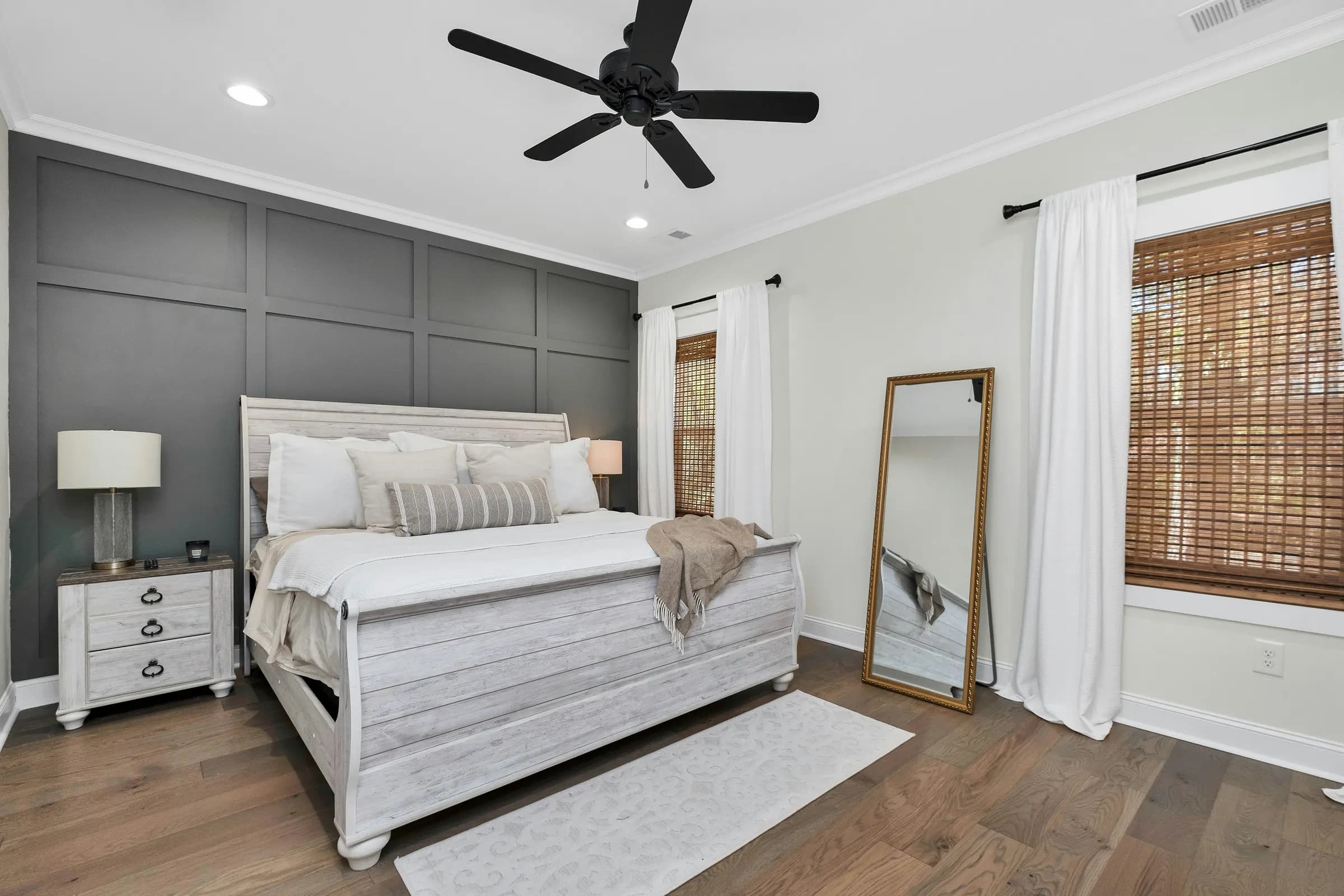
Living rooms, dining rooms, and adult bedrooms: Matte or eggshell. These rooms see less wear, and in bright Florida light, a lower sheen reduces glare from big windows and sliding doors.
Hallways, entryways, family rooms, and kids' rooms: Eggshell or satin. These walls get bumped, touched, and wiped, so washability matters.
Kitchens: Satin or semi-gloss, especially near the stove and sink where grease and splashes happen.
Bathrooms and laundry rooms: Satin or semi-gloss in a mildew-resistant formula.
Trim and doors: Satin, semi-gloss, or gloss. A higher sheen on trim than on walls also creates a subtle, finished contrast.
Cabinets: A cabinet-grade enamel, usually in satin or semi-gloss. Regular wall paint often doesn't hold up to daily use. Our cabinet painter hiring guide explains why.
Exterior sheen
Outdoors, sun, rain, and humidity all play a part. Flat and low-sheen finishes are common on stucco walls because they hide texture and minor surface flaws. Satin or semi-gloss is often used on trim, fascia, and doors because it sheds dirt and water and wipes clean. Always follow the product maker's recommendations for your surface. Our guide to exterior colors in the Florida sun covers how sheen and color work together outside.
Common sheen mistakes
A few choices cause most of the regret:
- Semi-gloss on large, imperfect walls. It shows every patch and roller mark, especially in bright light. Save it for trim and wet rooms.
- Flat paint in a busy hallway or kids' room. It can scuff and mark easily and may not clean up well.
- Plain wall paint in a steamy bathroom. Without a moisture-resistant formula and good ventilation, mildew can appear.
- Mixing sheens on the same wall. Touching up an eggshell wall with satin leaves shiny patches. Keep a labeled can of leftover paint for touch-ups.
- Skipping prep on glossy surfaces. New paint may not stick well to old semi-gloss or gloss unless it's cleaned and scuffed first.
Testing sheen before you buy
Sheen looks different on a chip than on a wall, and different from brand to brand. Before committing:
- Buy a sample of the actual product in the sheen you're considering.
- Paint a patch large enough to judge.
- Look at it in raking light, with sunlight or a flashlight coming across the wall at a low angle.
- Check it at different times of day, since glare shifts as the sun moves.
If flaws jump out, step down a sheen or plan more prep. Our guide on how to prep walls for painting walks through the steps.
Ready for help?
If you'd rather leave the choices and the brushwork to someone else, ask any painter you interview which sheen they recommend for each room and why. When you're ready, you can request a free estimate from a local painter listed on CityPaintPros. For more guides, visit the DIY hub.
Step by step
- 1
Learn the sheen scale
Sheens run from flat and matte, which reflect little light, through eggshell and satin, to semi-gloss and gloss, which are the most reflective and easiest to clean.
- 2
Pick a finish for ceilings
Choose flat for most ceilings, since it hides imperfections and glare. Consider a moisture-resistant ceiling product in bathrooms.
- 3
Choose sheen for living spaces and bedrooms
Use matte or eggshell in living rooms, dining rooms, and adult bedrooms, where walls see less wear and a soft finish reduces glare from bright windows.
- 4
Choose sheen for high-traffic rooms
Use eggshell or satin in hallways, kids' rooms, family rooms, and entryways, where walls get touched and need regular wiping.
- 5
Choose sheen for kitchens, bathrooms, and laundry rooms
Use satin or semi-gloss with a mildew-resistant formula in wet and humid rooms so walls can be wiped down and resist moisture.
- 6
Choose sheen for trim, doors, and cabinets
Use satin, semi-gloss, or gloss on trim and doors, and a cabinet-grade enamel on cabinets, for durability and easy cleaning.
- 7
Choose sheen for exterior surfaces
Use flat or low-sheen finishes on stucco walls to hide texture, and satin or semi-gloss on trim, fascia, and doors, following the product maker's guidance.
- 8
Test before you commit
Paint a sample of the actual product and sheen on the wall and look at it in raking light at different times of day before buying all your paint.
Frequently asked questions
What is the most forgiving paint sheen?
Flat and matte finishes are the most forgiving because they reflect little light and hide wall imperfections. The tradeoff is that they're usually harder to scrub clean.
What sheen should I use in a bathroom?
Satin or semi-gloss is a common choice for bathrooms because it resists moisture and wipes clean. In humid climates, pick a product labeled for mildew resistance too.
Can I use the same sheen everywhere?
You can, but most homes look and wear better with a lower sheen on walls and ceilings and a higher sheen on trim, doors, and wet rooms.
Do sheen names mean the same thing across brands?
Not exactly. One brand's eggshell may look closer to another brand's satin. Look at a painted sample of the actual product before you commit.
Can I put a lower sheen over a glossy paint?
Yes, but glossy surfaces should be cleaned and lightly sanded, and sometimes primed, so the new paint bonds well.
Get a free estimate
During our Tampa Bay pilot, estimate requests go to Tampa Painter, a local painting company listed on CityPaintPros, who will contact you directly.
Form not loading? Open it in a new tab.